
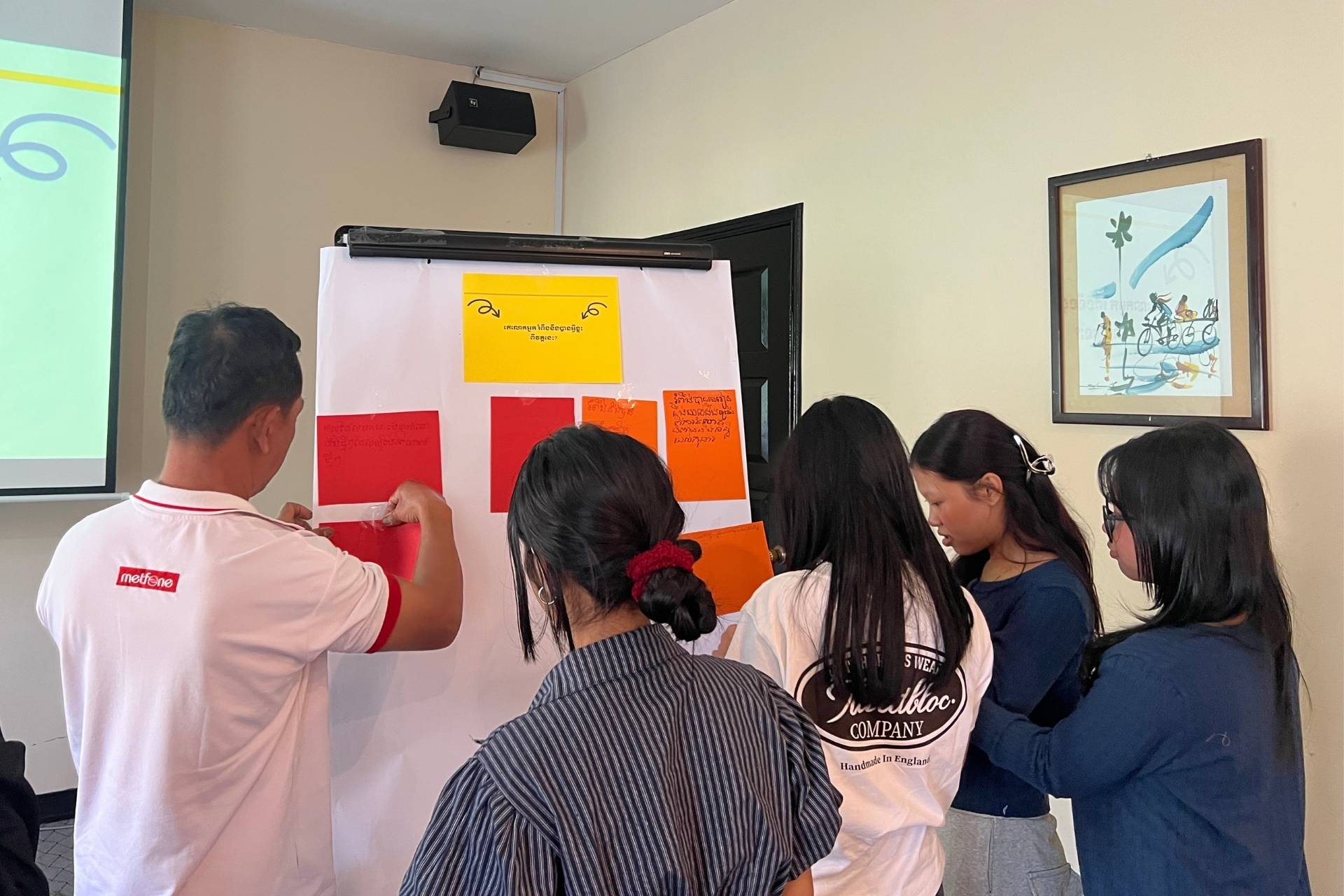
APLE Cambodia successfully conducted its latest empowerment program under the theme “Enhancing Children’s Empowerment to Participate and Report with Confidence and Safety,” marking the third specialized training session for girl survivors in 2025.
Bringing Together Survivors from Across Cambodia
The December session welcomed 14 survivors (all girls) and five guardians from multiple provinces, including Kampong Thom, Kampong Cham, Kandal, and Phnom Penh. This multi-provincial approach ensures survivors across Cambodia have access to trauma-informed support and peer connections.
Creating Safe Spaces for Peer Support
Participants expressed genuine enthusiasm about the program’s supportive environment and the formation of peer support groups. These groups provide survivors with opportunities to: encourage one another through shared experiences; exchange information and coping strategies; build mutual support networks; and engage in collaborative learning. The safe, structured environment allows survivors to connect with others who understand their experiences, reducing isolation and building resilience.
Building Confidence Through Knowledge and Skills
The session focused on strengthening coping strategies and enhancing recognition abilities to help children and youth feel more confident and safer when reporting. Key program components included:
Trauma Understanding and Response
Expert psychologists provided guidance on understanding psychological trauma and appropriate responses, giving participants tools to: recognize signs of possible exploitation or abuse; develop healthy coping mechanisms; and build trauma-informed responses
Safe Reporting Skills
The program emphasized empowering children to participate more effectively in reporting processes by building knowledge of safe responses and appropriate procedures.
Impressive Results and Satisfaction Rates
The impact of APLE’s approach is evident in both participation and feedback:
Total 2025 participants: 31 girls across three specialized trauma sessions
Active engagement: Participants consistently engaged in knowledge-building discussions
High satisfaction rate: 95% of participating girls reported satisfaction with topics and discussion methods
Survivors particularly appreciated the meaningful participation opportunities, effective feedback mechanisms, and improved understanding of safe responses that the program provided.
Expert Perspectives on Trauma-Informed Care
Ms. Nget Kimsang, Trauma Care Specialist at Garden of Hope, shared her experience from the session:
“I am very happy to share knowledge on trauma and appropriate responses with children who have experienced CASE/OCSAE, so they can better understand and manage trauma. I also greatly appreciate their active participation.” Her comments highlight the collaborative nature of the program and the active engagement from survivors seeking to build their knowledge and resilience.
Sustained Impact Through Peer Networks
By establishing peer support groups within a safe and supportive environment, the program creates lasting connections that extend beyond individual sessions. These networks enable:
Ongoing mutual support
Continued sharing of coping strategies
Collaborative learning opportunities
Long-term resilience building
Moving Forward: Trauma-Informed Empowerment
APLE Cambodia’s consistent approach to trauma-informed empowerment demonstrates the organization’s commitment to survivor-centered care. The program’s success—evidenced by high satisfaction rates and active participation—shows how specialized, peer-supported interventions can effectively build confidence and safety skills among CASE/OCSAE survivors. The multi-provincial reach ensures that survivors across Cambodia can access these critical services, while the peer support model creates sustainable networks that continue supporting survivors long after formal sessions end.
Through programs like this, APLE Cambodia continues strengthening Cambodia’s child protection ecosystem, empowering survivors to rebuild their lives with confidence, knowledge, and peer support.