
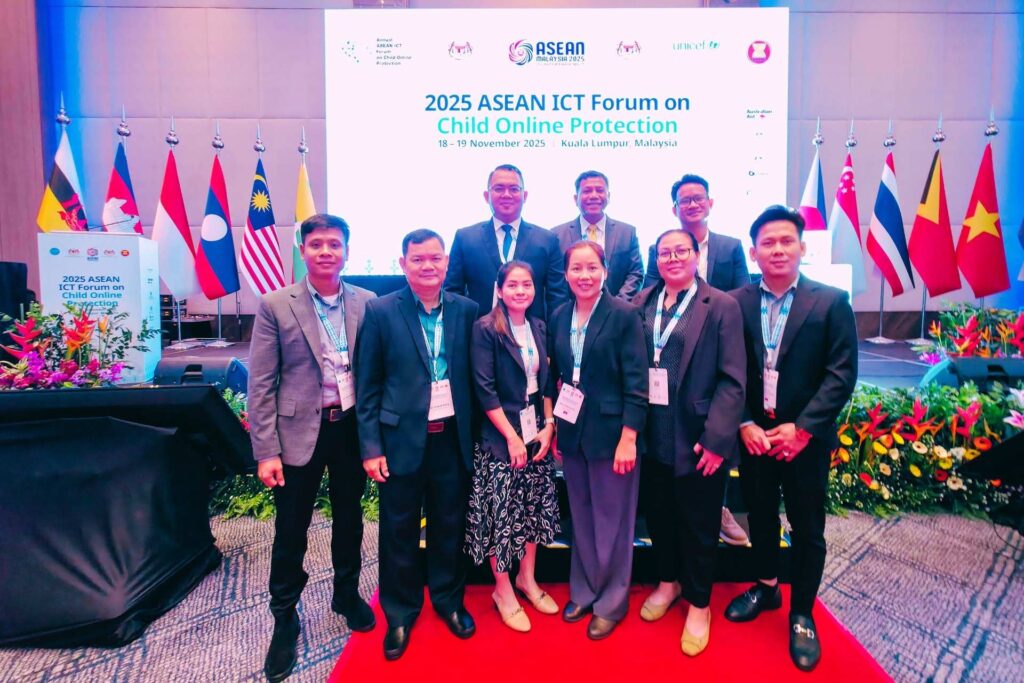
In Kuala Lumpur on November 18–19, 2025, two APLE representatives joined government leaders, industry experts, and child protection advocates from across ASEAN for the 2025 ASEAN ICT Forum on Child Online Protection: Empowering Children and Strengthening ASEAN’s Commitment to a Safer Digital Future. The energy in the room was clear: our region is moving from words to action to keep children safe online.
Convened by Malaysia’s Ministry of Women, Family and Community Development and the Ministry of Communications, in collaboration with the ASEAN Commission on the Promotion and Protection of the Rights of Women and Children (ACWC) Malaysia and Thailand, and supported by UNICEF’s East Asia and Pacific Regional Office, the forum brought together voices from 11 ASEAN members. That diversity mattered. It meant tough questions were asked, practical solutions were shared, and commitments were renewed with a focus on children’s rights and real-world outcomes.
The forum builds on a strong regional foundation. ASEAN Heads of State adopted the Declaration on the Protection of Children from All Forms of Online Exploitation and Abuse in 2019. In 2021, ASEAN endorsed the Regional Plan of Action (RPA) for the Protection of Children from All Forms of Online Exploitation and Abuse for 2021–2025, followed by an extended RPA for 2026–2030. This continuity is crucial. It gives countries a roadmap, aligns cross-border priorities, and pushes partners like APLE to strengthen implementation at national level while connecting to regional efforts.
Across two days, participants tackled meaningful and sometimes challenging topics. Sessions explored how restrictions affect online protection and well-being from young people’s perspectives; what ASEAN and other regions have learned about designing and implementing legislation regulating access; the role of online gender narratives in child abuse and gender-based violence; and, most importantly, how to move from paper to action for the next RPA (2026–2030). The tone was pragmatic and child-centered: protect, empower, and do no harm.
For APLE, the forum delivered three big takeaways that will shape our work in the months ahead. First, multi-stakeholder engagement isn’t a nice-to-have—it’s the engine of progress. Government, civil society, the private sector, academia, and donors each hold pieces of the solution; when they coordinate, children benefit faster and more sustainably. Second, child-centered approaches belong at the heart of prevention and response. Co-creating solutions with children and young people ensures interventions are relevant, respectful, and effective. Third, cross-border collaboration is essential for victim identification, referrals, and case management, especially when abuse transcends national boundaries. And as technology evolves, AI-related policy must be designed and governed with children’s rights front and center.
Our representatives left with new connections, practical tools, and renewed conviction. They engaged with partners on case referral pathways, shared lessons from Cambodia’s child-friendly interview rooms and frontline training, and learned how other countries are integrating technology, survivor support, and legal reform. These conversations will translate into stronger protocols, better coordination, and more child-centered services at home.
Participation in the forum also reflects APLE’s commitment to investing in our team’s capacity. When our staff learn, connect, and contribute at regional platforms, they bring back insights that help us refine programs, inform policy dialogue, and strengthen collaboration with authorities. That investment is made possible thanks to the support of Bread for the World Germany, Terre des Hommes Germany, and the World Childhood Foundation Sweden—partners who understand that protecting children online demands sustained commitment across borders and sectors.
The urgency is real. The number of children at risk of online harms is growing quickly, and the complexity of those harms is increasing. But the momentum is equally real. ASEAN has a clear roadmap, governments are prioritizing child protection, and organizations like APLE are building the bridges between policy and practice—turning declarations into child-safe procedures, turning plans into survivor-centered services, and turning forums into lasting partnerships.
From Kuala Lumpur back to Cambodia’s classrooms, police stations, and community centers, our focus remains the same: empower children, strengthen systems, and uphold rights. The forum reminded us that we are not alone in this work—and that together, ASEAN can build a safer digital future where every child’s dignity, safety, and potential are protected.