

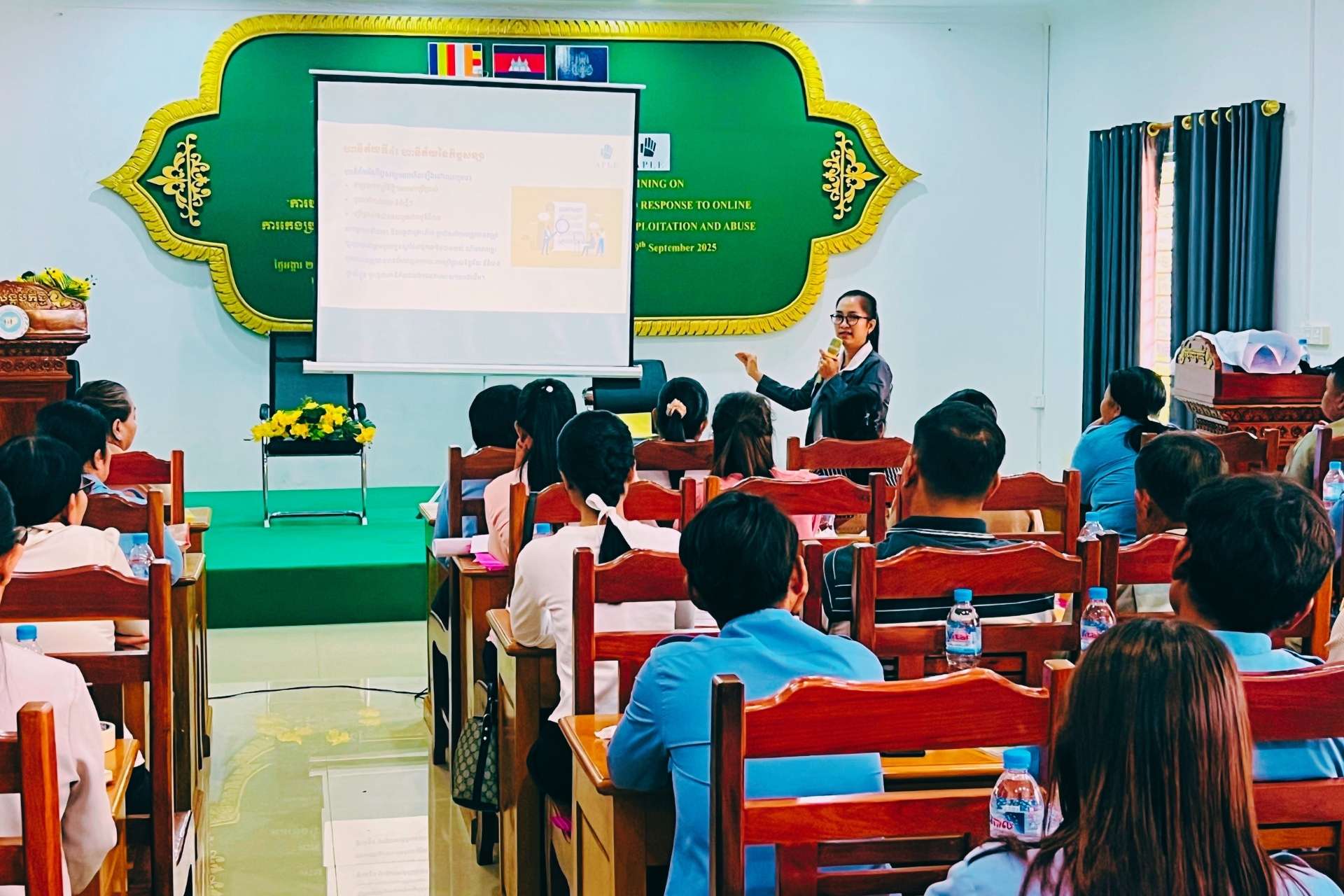
When Teacher Molika* noticed one of her students becoming withdrawn and secretive about her phone use, she recognized the warning signs immediately. Just months earlier, Molika had attended APLE Cambodia’s training on preventing online child sexual exploitation and abuse. Armed with new knowledge about digital dangers and response protocols, she was able to intervene quickly, connect the student with appropriate support, and potentially save her from further harm.
Molika’s story represents a quiet revolution happening across Cambodia’s schools and communities. Through strategic partnerships between the Ministry of Education, Youth and Sport (MoEYS) and APLE Cambodia, hundreds of educators and frontline officials are becoming the first line of defense against online predators targeting children.
The scale of this transformation is remarkable. Since MoEYS and APLE signed their Memorandum of Understanding for the “Promoting Internet Safety in Education 2024-2027” project, both organizations have conducted intensive training programs reaching deep into Cambodia’s educational system. Five specialized training sessions across Phnom Penh, Kandal, Battambang, Siem Reap, and Kratie provinces have equipped 288 teachers with critical knowledge and skills to prevent and respond to online child sexual exploitation and abuse.
These aren’t simple awareness sessions—they’re comprehensive capacity-building programs designed to transform how educators interact with the digital challenges facing their students. With funding support from Bread for the World Germany, Terre des Hommes Germany, and the World Childhood Foundation Sweden, the trainings provide teachers with practical tools to identify warning signs, respond appropriately to disclosures, and create safer digital environments for learning.
The most recent training in Kratie province exemplified the high-level commitment to this initiative. Fifty-seven primary, secondary, and high school teachers participated in the December 2-3, 2025 session, which was presided over by HE Dr. Soeur Socheata, Undersecretary of State of the Ministry of Education, Youth and Sports. The presence of HE Mrs. Kham Sopheap, Deputy Governor and Chair of the Secretariat of the Kratie Provincial Committee for Counter Trafficking, underscored the multi-agency approach essential for protecting children.
Dr. Soeur Socheata’s opening remarks highlighted how these trainings reflect MoEYS’s strategy as the prevention group lead in the National Committee for Counter Trafficking. She emphasized that the initiative promotes children’s rights while keeping students safe in schools and communities, encouraging trained teachers to become multipliers who share their knowledge with colleagues, students, and family members.
The impact is already measurable and encouraging. Results from quick self-assessments reveal that 42% of the 54 teacher-respondents indicated they felt 75% confident in using their newly acquired knowledge and skills and sharing them with students, colleagues, and family members. This confidence level demonstrates not just learning but readiness to act—a crucial factor in preventing exploitation before it occurs.
But teachers aren’t the only frontline defenders being equipped for this fight. Recognizing that child protection requires a comprehensive approach, APLE and the Child Protection Department of the Ministry of Social Affairs, Veterans and Youth Rehabilitation have jointly organized six additional trainings targeting social service officers and workers. Between March and September 2025, these sessions reached 354 frontline officials across Phnom Penh, Siem Reap, Kandal, and Ratanakiri provinces.
These social workers and community officials received intensive instruction on key topics including child rights, online risks, definitions and types of online child sexual exploitation and abuse, how to identify signs of victimization, victim support and assistance protocols, and proper reporting procedures for suspicious cases. The trainings, supported financially by OneChild, Bread for the World, Terre des Hommes Germany, and World Childhood Foundation, fill a critical gap in community-level response capacity.
The enthusiasm and engagement from participants has been overwhelming. At a September 29, 2025 training session, 63 participants from 29 NGOs in Phnom Penh demonstrated collective commitment to safeguarding children in their communities. One participant captured the transformative nature of the experience: “I am really satisfied with this training because it has provided me with new knowledge and skills so that I can use them in my daily work with children.”